
Whitewashing a Tyrant
The media establishment wants you to admire Ali Khamenei's taste in Russian literature.

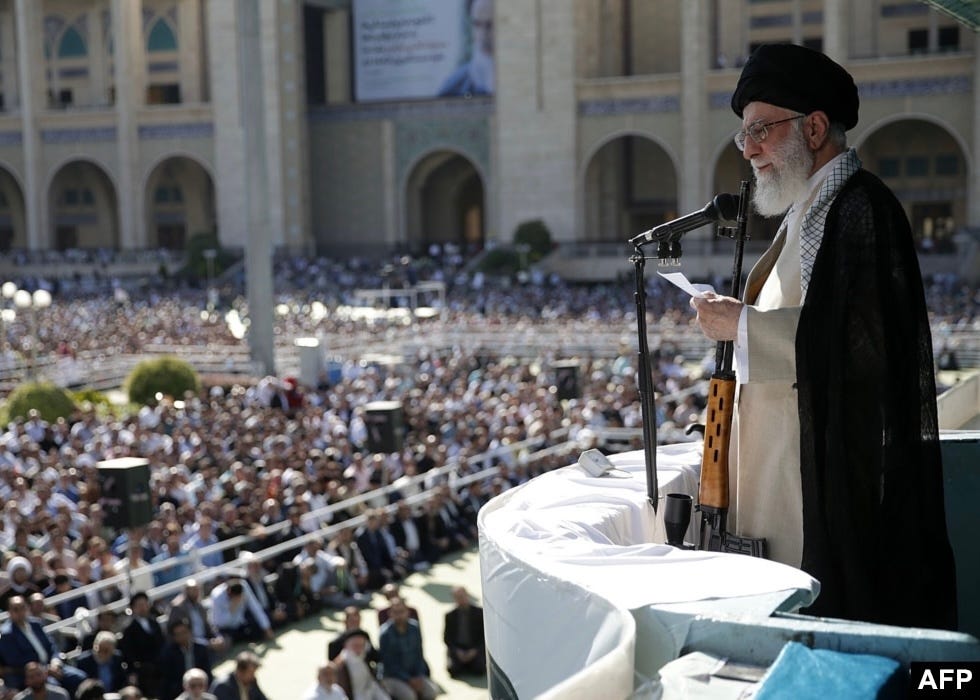
Ali Hosseini Khamenei is dead. For over three decades, he ruled the Islamic Republic of Iran, funding proxy wars, crushing domestic protests, and ordering the deaths of American service members. A reasonable person would expect his obituary to read like a criminal indictment. Read the Wall Street Journal, however, and you’ll find a baffling profile of a misunderstood foreign policy pragmatist.
In the obituary published today, the Journal introduces Khamenei as an “austere cleric,” labels him a “nimble politician,” and even assures readers he was a “pragmatist as well as an ideologue.” They frame his architecting of the October 7 attacks and his escalation of the Syrian Civil War as if they were routine military operations. Reading this sanitized retrospective feels like reviewing a corporate compliance document written by a public relations firm desperate to shield a guilty client. This has been tried before, with other “austere” leaders of Islamic states.
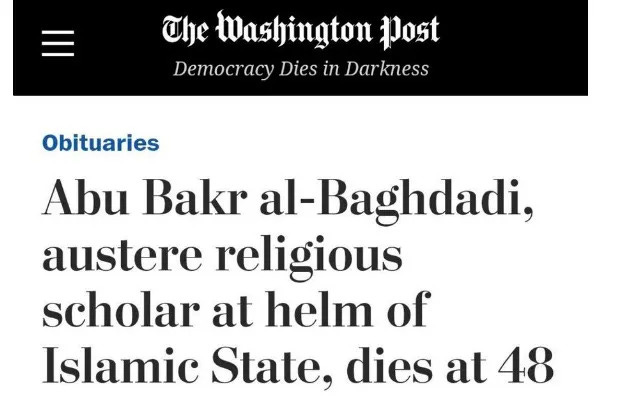
This framing is typical of The Washington Post, but unusual coming from the center-right editorial board at the Journal. They claim that under Khamenei’s watch, Iran was “Neither a full-blown dictatorship nor a democracy,” suggesting his system contained elements of both. That represents an absurd categorization for a government that hanged dissidents from cranes and gunned down its own citizens. When Iranians protested economic hardship in 2019, Khamenei’s security forces killed hundreds of people in a few days. When the people protested again earlier this year, the regime killed tens of thousands in a few weeks. Calling Khamenei’s dictatorship a hybrid democracy constitutes journalistic malpractice at best, and a conspiracy to whitewash history at worst.
The obituary wanders further into the surreal when it attempts to humanize the man responsible for decades of bloodshed. The piece highlights that Khamenei read widely and praises his varied literary tastes. We’re told he lauded Russian novelists. We’re expected to appreciate that he admired John Steinbeck’s “The Grapes of Wrath” and called Victor Hugo’s “Les Misérables” a miracle of novel writing. Highlighting a dictator’s favorite books remains a tired, lazy media trope. Applying that trope to a man whose regime beat women to death for showing their hair borders on the obscene.
The institutional press clings to this framing because acknowledging evil requires a moral courage they lack. Labeling Khamenei a tyrant demands that the international community treat him like one, ruins polite diplomatic consensus, and threatens journalists’ access to power. Admitting that a head of state built his legacy on terror feels too primitive for a sophisticated editorial board. They'd rather invent complexities to justify their own comfortable detachment from moral clarity.
Khamenei directly managed a massive enterprise of terrorism, contradicting the claim that he merely reshaped the balance of power. During the U.S. operations in Iraq, Khamenei ordered the Islamic Revolutionary Guard Corps to fund and train local militias. Those armed groups killed hundreds of U.S. servicemen.
Khamenei wasn’t a lawful or honorable military commander. Military law draws a clear line between legitimate combatants and war criminals. His defining achievement wasn’t fielding a uniformed military force that respected the Geneva Conventions. Instead, he built and directed proxy networks of unlawful combatants who hid among civilians to execute terror campaigns. He defined the modern application of the strategy.
Yet the Journal decides to highlight that Iran under Khamenei boasted some of the best healthcare and education in the region. They point out that life expectancy increased during his reign. The text reads like the old jokes about dictators making the trains run on time, except the editorial board is playing it straight.
If we want the truth about his regime, we can look at what actual Iranians are broadcasting. Citizens inside the country and throughout the diaspora use platforms like Substack and X to bypass the institutional gatekeepers and show us reality. They are posting videos of themselves cheering his death and tearing down his portraits. These people lived under his boot for decades and know who he was. They are celebrating the demise of a man who destroyed their country.
It’s pointless to expect honesty from our established institutions. The true legacy of Ali Khamenei is written in the stories of the American troops he murdered, the Iranians he tortured, the Israelis and Syrians he helped slaughter, and all the chaos that followed. The media class prefers to “contextualize” his reign and paint him as a complex statesman who navigated a difficult geography. He was a tyrant. They’ll keep trying to sell you a softer version of the truth. Don't buy it.
Sic semper tyrannis